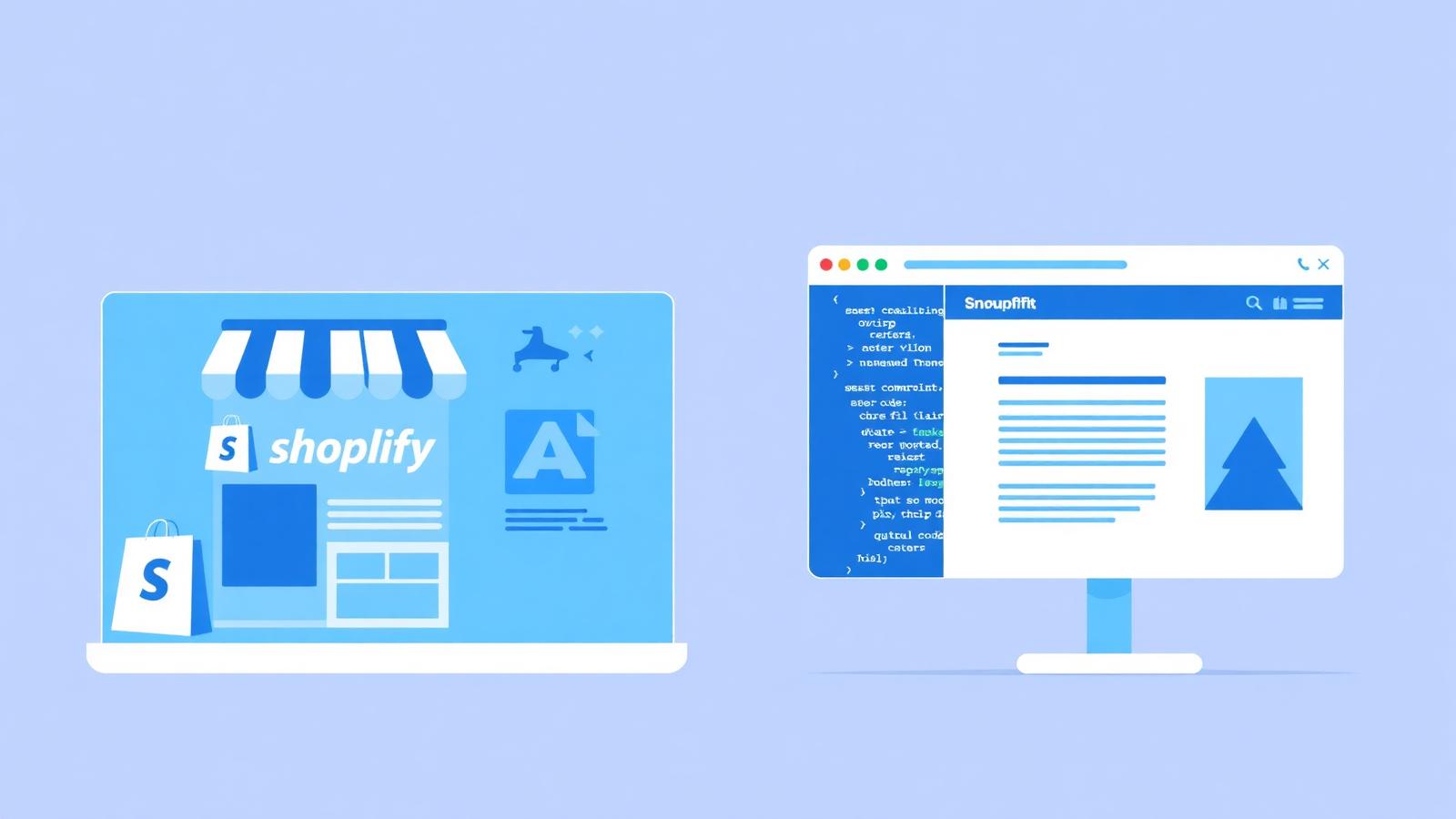
One of the first questions we hear from Iowa small business owners is simple: 'Should I use Shopify, or should I build a custom website?' The honest answer is that both are excellent tools — they just solve different problems. As a Des Moines-based website designer and developer, my goal is to help you pick the platform that fits your business today and can grow with you tomorrow.
When Shopify Makes Sense
Shopify is purpose-built for online stores. If your primary goal is selling products, managing inventory, and shipping orders — Shopify solves 80% of the problem out of the box. It handles payments, taxes, shipping labels, and abandoned cart recovery without a developer touching a line of code.
- You sell physical or digital products and need a real checkout.
- You want inventory, discount codes, and shipping handled for you.
- You value fast setup and a large ecosystem of apps and themes.
- You need built-in payment processing (Shopify Payments, Stripe, PayPal).
- Your team wants to add products and update content without a developer.
For Iowa retailers, boutiques, coffee roasters, and product-based businesses, Shopify usually wins on speed to launch and total cost of ownership in the first year.
When a Fully Custom Website Makes Sense
A custom website is the right call when your business is more than a catalog. If you run a service business, manage bookings, integrate with an internal CRM, publish long-form content, or need workflows that don't fit a template — Shopify's rails start to slow you down.
- You are a service business, agency, healthcare provider, or consultancy.
- You need custom lead forms, quoting tools, or member portals.
- You are running events, registrations, or ticketing (like our BETR Dermatology and Paddlepalooza projects).
- SEO and content marketing are core to how you grow.
- You want to integrate with tools like Airtable, HubSpot, or a custom database.
Comparing the Two: Cost, SEO, Flexibility, and Maintenance
Cost
Shopify starts around $29–$79/month plus theme and app costs — predictable but recurring. A custom website has a higher upfront investment but a lower monthly footprint. Over three to five years, custom websites often cost the same or less, especially for businesses that don't need e-commerce features.
SEO
Both platforms can rank well, but custom websites give you full control over page structure, schema markup, Core Web Vitals, and local SEO signals — critical if you're competing for terms like 'website designer Des Moines' or 'small business website Iowa.' Shopify's SEO is solid, but constrained.
Flexibility & Integrations
Shopify apps solve most common needs, but each app is another subscription and another dependency. Custom builds let you integrate directly with Airtable, Stripe, Resend, Supabase, or any API you need — usually with fewer moving parts long-term.
Maintenance
Shopify handles hosting, security, and platform updates automatically. Custom sites need a partner who owns hosting, monitoring, and updates — which is exactly what our ongoing support plans cover.
Real Examples From Our Portfolio
We've built both. Shift Electric runs on Shopify because a product catalog, cart, and Stripe checkout were the fastest path to revenue. Paddlepalooza and BETR Dermatology Exchange are custom-built because they needed registration flows, Airtable-backed data, and event logic that Shopify simply doesn't ship with.
How Fisher Built Websites Helps You Decide
The first conversation is about your products, workflows, team, and where you want the business in three years. Sometimes the answer is 'Shopify with a custom theme.' Sometimes it's 'fully custom, hosted and maintained for you.' Sometimes it's a hybrid — a Shopify storefront connected to a custom back end for CRM, Airtable, or automated workflows. You get a straight recommendation with no upsell, because both options are built under one roof here.
Not sure which solution is right for your business? Let's talk.
Start Your Project